
When I worked as a travel designer, the arrival was the part of the trip I obsessed over most. Not the villa. Not the itinerary. The forty minutes between the front door opening and the client sitting down for the first time. Almost everyone in the business focused on the grand pieces — the chef, the boat, the view — and almost no one thought hard about the thing waiting on the console table when the door swung open. That object, more than any other, told the guest whether they had been thought about or merely accommodated.
The wedding welcome bag is the modern equivalent. It is the first object a guest touches after eight hours of flying and a rental car up the 101. It sets the tone for a weekend the couple has been planning for eleven months. And most of the time, it is logistics dressed up as hospitality.
What follows is a working pâtissier's notes on what actually belongs inside a Santa Barbara welcome bag — for the couple bringing eighty guests to Montecito for a Saturday at Rosewood Miramar, for the destination weekend at San Ysidro Ranch, for the vineyard weekend in Los Olivos where nobody is staying in the same hotel.
Why most welcome bags fail
The problem is not effort. The couple has usually spent real money and real hours on the bag. The problem is category. A granola bar, a map, a bottle of water, and a small bag of trail mix arrive at the guest's door as logistics they could have gotten from the front desk. The bag says we planned for you when it should say we chose for you.
The guest opens the bag once. They drink the water. They put the bar in their carry-on for the flight home. They leave the trail mix on the desk when they check out. The couple has spent forty dollars per room to be logistically responsible, which is not the same as being remembered.
The fix is not to spend more. It is to put one object in the bag that the guest could not have gotten from the front desk — and to put it in a form that survives the room it will sit in for twelve hours.
The room-temperature reality
Every welcome bag hits the same wall: the guest checks in at 3 p.m., the bag has been sitting on the desk since 11 a.m., the room is warm, and whatever is inside has been at room temperature for four hours before it is touched.
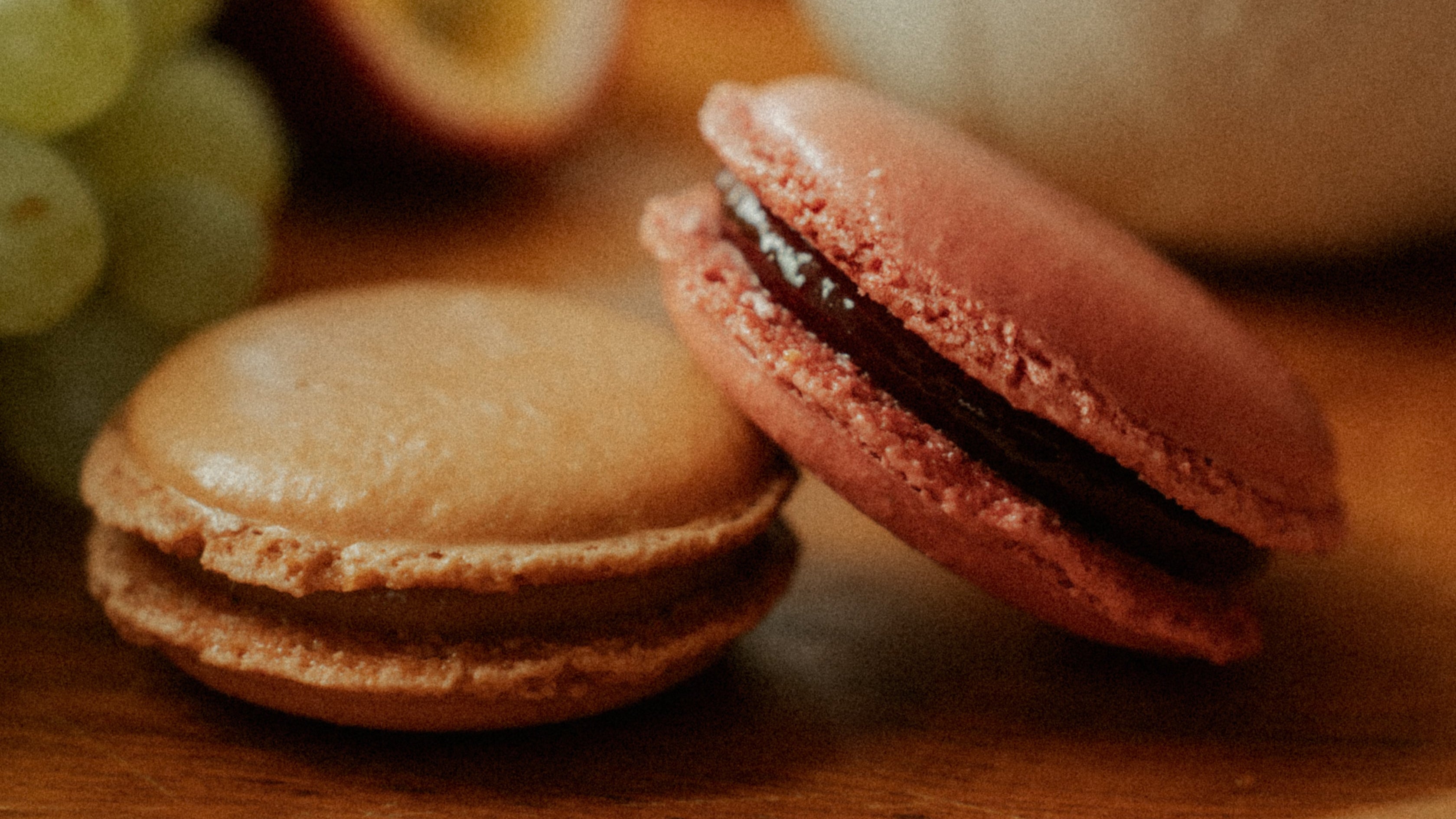
This is where most edible additions collapse. Chocolate blooms. Fudge sweats. A cupcake goes stale by dinner. A macaron, made correctly, does not do any of these things — a properly aged French macaron is stable at cool room temperature for a day, which is exactly the window the welcome bag has to survive. The maturation window matters here: a macaron eaten within twenty-four hours of leaving the atelier is at its best, which is why we deliver welcome bags the morning of check-in, not the day before.
That said, the room does need to be under about 75°. A Santa Ynez August afternoon with the blinds open and the AC off is not a room a macaron can sit in for six hours. If the venue is warm and the check-in is late, we deliver the boxes to the concierge with instructions to refrigerate until room-drop, and the hotel walks them up thirty minutes before the guest is expected.
What we build for the welcome bag context
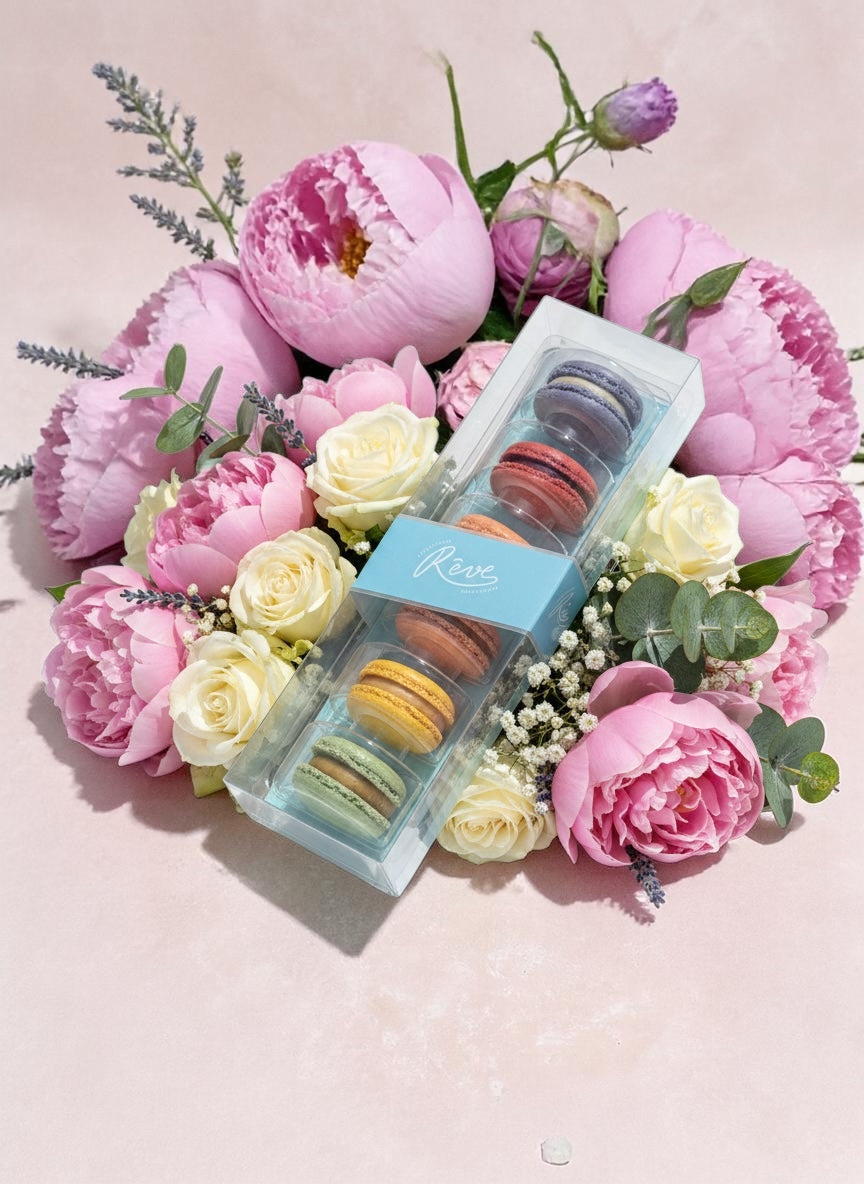
A welcome-bag box is our six-piece box, but almost everything about it is custom to the wedding. The packaging structure stays — the same six-piece format that ships on the site — because it protects the macarons and it fits the paper handled bag without crushing whatever else is inside. Everything else is written to the couple.
The six flavors are chosen with them. For example: two crowd flavors (vanilla bean, dark chocolate, salted caramel), two seasonals that fit the wedding month (Meyer lemon in April, apricot in July, fig in October), and two that mean something personally — the flavor from the trip where he proposed, the cardamom from her grandmother's kitchen, the pistachio from the café in Paris where they got engaged. Those last two are the ones guests mention on the drive home.
The colors are matched to the wedding palette, not to our seasonal shelf. Blush and ivory for a garden ceremony at San Ysidro Ranch. Bronze and deep chocolate for an October Sunstone dinner. A soft green for the Los Olivos vineyard weekend. The macarons arrive as a small painted row inside the box.
The bag is the couple's. Most provide their own — a natural paper handled bag with the monogram, a canvas tote from a Santa Barbara maker, the linen sack from the destination itself. The Rêve box sits inside, and we deliver either loose boxes to the planner for insertion or the fully assembled bag if that is what the run sheet calls for.
The label is custom too. The couple's monogram, the wedding date, a two-line message the couple writes themselves. The card inside is the part guests actually keep. I have watched a bride's grandmother tuck one into her handbag on her way out to dinner.
The hotel drop — how a hundred bags get to three hotels
The logistics matter more than couples realize. A destination wedding weekend usually spreads guests across three or four properties — the Miramar for the immediate family, the San Ysidro Ranch for the college friends, an Airbnb block in Summerland for the plus-ones — and every hotel has a different check-in window and a different concierge policy about accepting perishables.
We handle this out of our Coldtainer, the commercial mobile refrigeration unit installed in the back of our electric Volkswagen ID. Buzz. Rêve operates with all required licenses, which matters at the hotels that require a certificate of insurance and a health-permit copy before their concierge desk will accept a delivery. On a typical Friday morning, we run a route: Miramar first (7:30 a.m., refrigerated hold at the pastry kitchen), Belmond El Encanto next (9 a.m., concierge cooler), San Ysidro Ranch at 10:30 a.m., private Airbnb block last with direct-to-door drop. The boxes stay under 55° from the atelier until the hotel accepts custody.
The couple gets one confirmation with photographs at each drop. The planner — often our partners at Merry & Zohe Events — gets the same email. Nothing sits in the sun on a loading dock.
Count math
The math is simpler than most couples fear.
One six-piece box per guest room, not per guest. A couple sharing a room shares the box. Round up by ten percent for last-minute room additions and family friends who show up unannounced. For eighty guests spread across fifty-two rooms, that is fifty-seven boxes. For a hundred and twenty guests across seventy-eight rooms, eighty-six boxes. We build to that number, and we build a small overage box for the planner in case a bag was lost in a hallway.
Lead time is six weeks for weddings under a hundred guests, eight weeks for weddings over that. Rush windows exist and we honor them when the schedule allows. Custom flavors — the cardamom from grandmother's kitchen — need eight weeks minimum for the ingredient sourcing and the trial batches.
Concierge FAQ
How many macarons per welcome bag? Six. Our welcome-bag box is the same six-piece structure that ships on the site — one box per guest room, not per guest, with flavors, colors, and label custom to the wedding.
Do the macarons need to be refrigerated in the hotel room? No. A properly aged French macaron is stable at cool room temperature (under 78°) for a day. If the room is warm or check-in is late, we deliver to the concierge for refrigerated hold and hotel room-drop thirty minutes before guest arrival.
Can you deliver directly to the hotel — Rosewood Miramar, San Ysidro Ranch, Belmond El Encanto? Yes. We hold current certificates of insurance and food-service permits for all Santa Barbara and Montecito properties that require them, and we deliver refrigerated from our Coldtainer in an ID. Buzz. Multi-property routes on a single morning are standard.
How far in advance should we order? Six weeks for weddings under a hundred guests. Eight weeks for larger weddings or any custom flavor requiring ingredient sourcing.
Rêve Pâtisserie crafts hand-piped French macarons in Santa Barbara, in the Bordeaux tradition. Our custom tower, welcome bag, and dessert-hour work is delivered refrigerated across Santa Barbara, Montecito, and the Santa Ynez Valley in an electric Volkswagen ID. Buzz.
Share:
Vetting a Wedding Pastry Vendor in Santa Barbara: A Working Pâtissier's Checklist
The Short List: What's Actually in a Rêve Macaron