Every bakery says it uses the best ingredients. It might be the least believable sentence in food — not because it's always false, but because it's almost never explained.
So let me explain ours.
On our homepage we make a promise: recipes intentionally simple and transparent — no unnecessary additives, no preservatives, no artificial flavors. That sentence is easy to write. This post is what it looks like in practice, standing in the atelier on Haley Street, reading the labels with me. It won't take long. The list is short on purpose.
The almonds
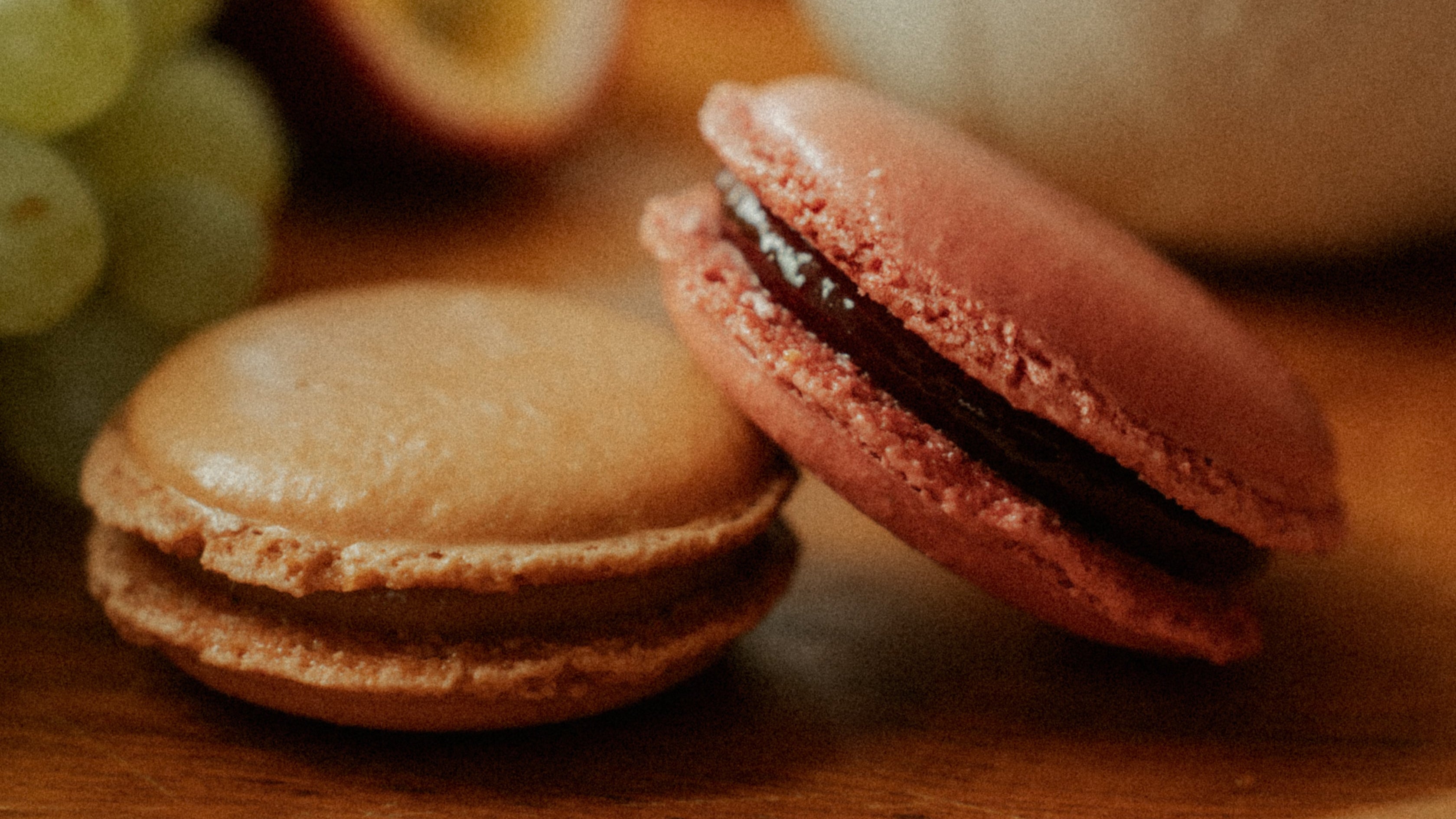
A macaron is mostly almonds and egg whites, which means there's nowhere for a mediocre ingredient to hide. We use fine California almond flour — nothing else in the shell but sugar and those egg whites. Almond flour is also the reason a true macaron is naturally gluten-free. Ours are, though they're not made in a certified gluten-free facility.
The cream and the butter
The cream comes from Straus Family Creamery, the organic dairy up the coast from us. The butter is European-style, higher in butterfat, which is what gives a curd its density and shine. There are cheaper ways to get that texture — palm oil being the industry's favorite shortcut — and we don't take them.
The vanilla
Real vanilla beans, split and scraped. Extract is fine for Sunday pancakes. A vanilla macaron deserves the bean — you can see the flecks in the ganache.
The chocolate
Our dark chocolate ganaches start from 100% cacao — a single strain from the High Amazon Basin, grown by Cacao Adventures. Starting from pure cacao means we decide exactly how dark the ganache runs, not a candy manufacturer. Dark chocolate is my own favorite, so this is the one I am most stubborn about.
The white chocolate ganaches are built on Barry Callebaut — real cocoa butter, cream, vanilla. White chocolate has a bad reputation it doesn't deserve; most people have only ever had the imitation.
The fruit
Our jams are made from scratch: fruit, sugar, a pot, and patience. When a macaron says raspberry, it means raspberries were cooked down in this kitchen — not that a flavoring was measured out of a bottle.
What you won't find
No preservatives. No artificial flavors. No pre-made mixes, no "macaron base," no shelf-stable shortcuts. This has one honest consequence: our macarons are at their best within five to seven days. We think that's a feature. Things made to last forever tend to taste like it.
That's the whole list. If you ever want to know what's in a specific flavor, ask — the answer will be short.
Warmly,
Julie
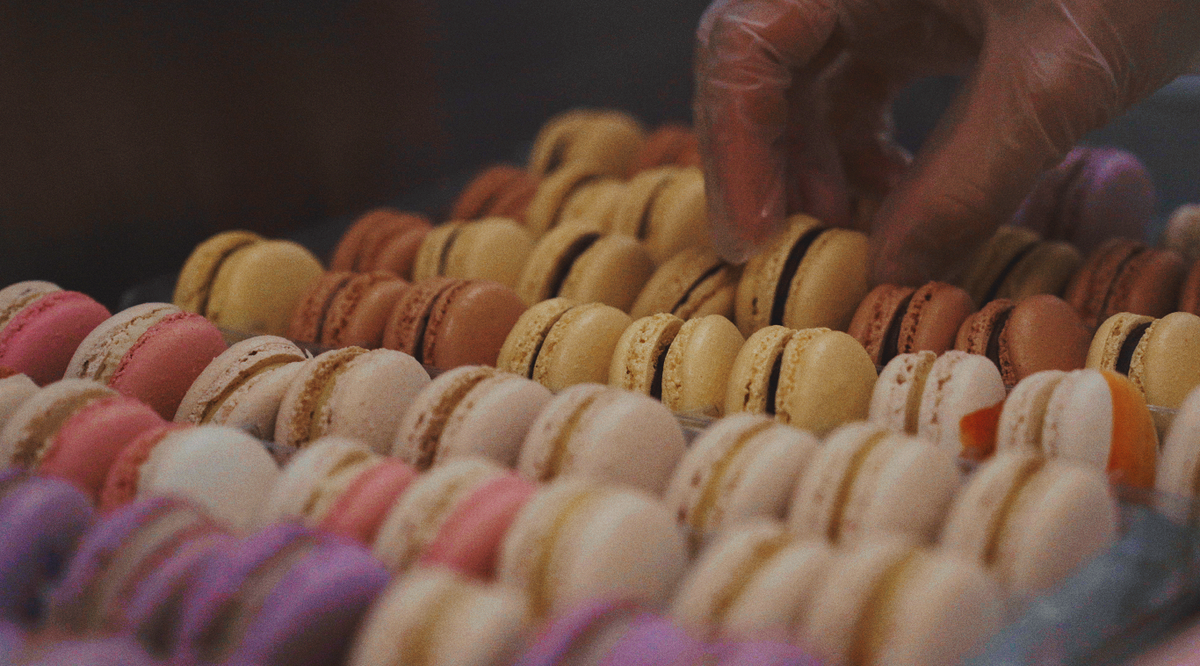
Hand-piped in small batches in our Santa Barbara atelier. Taste the current collection →
Share:
The Wedding Welcome Bag Guests Actually Open: A Pâtissier's Notes on What Belongs Inside for a Santa Barbara Wedding
The Thank-You After the Weekend at Their House: A Pâtissier's Notes on the Gift That Follows the Trip